The shape of an ordinary life
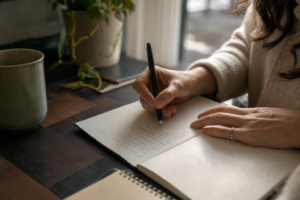
In my notebook, I wrote that much of life is made of habits. Looking at the sentence again, I find it useful less as a claim about how human behavior can be measured than as a way of looking at time. A life contains memorable decisions, unexpected events, and long stretches of ordinary repetition. The memorable parts draw attention. The repeated parts quietly occupy the calendar.
I tend to imagine my life through its turning points: beginning something, choosing a direction, discovering an idea. Yet a decision takes up relatively little time compared with the days that follow it. Deciding to learn something is one event. Returning to it on an unremarkable evening is another kind of activity, and perhaps a more consequential one over time.
The overall picture, as I understand it, has three parts. There are choices about what matters. There are repeated actions that give those choices a place in daily life. And there are circumstances, many outside my control, that make those actions easier or harder. Habits sit between intention and circumstance. They are neither a complete explanation of a life nor a small decorative improvement to it.
This matters to me because time and habits are things I want to handle better, not things I have mastered. I can appreciate a sensible routine while still failing to follow it. Writing that life is made of habits does not put me outside the problem. It makes the problem more visible.
The distance between deciding and doing
A decision has a certain clarity. For a moment, the future seems arranged. I will study this subject. I will make time for that project. The action exists in my mind without the interruptions, fatigue, or minor inconveniences that will accompany it in practice.
Repetition removes that flattering light. The same activity must fit into an actual day, alongside everything else. A plan that seemed reasonable in the abstract may require too much preparation. A task described as simple may conceal several unresolved choices. Before beginning, I have to choose the material, find the right place, decide how much is enough, and reconsider whether something else deserves attention first.
I have a tendency to think that unfamiliar things are beyond me before I have properly examined them. A vague project can therefore become a vague inability. I may call something difficult when I have not yet separated it into understandable parts.
Seeing the whole process helps. Learning a subject is not one indivisible act. It includes choosing a source, reading, making sense of it, attempting something, and returning to what remains unclear. Once I can see those parts, the next action becomes less mysterious. The difficulty may remain, but it has acquired edges.
I suspect that some habits fail before repetition even begins. They are asked to carry decisions that have not yet been made. What looks like a lack of discipline may sometimes be an unfinished plan. That possibility makes me a little less interested in judging my resolve and more interested in examining the work itself.
A small digression about clocks
A clock is an ordinary object with an unusual power: it makes time visible without making time tangible. Its hands or digits can describe an hour precisely, but they cannot explain what that hour felt like or what it contained.
As clocks became more widespread, shared schedules became easier to coordinate. Work, travel, and appointments could be arranged around increasingly precise divisions of the day. Yet the ability to measure time did not settle the matter of how to live within it. A carefully divided day can still be spent in ways that feel scattered.
I find a similar distinction in my own planning. A calendar records where an activity is supposed to go. It does not create the transition into that activity. Writing down a period for study leaves open the practical matter of sitting down, opening the material, and beginning.
This is where the humble objects around a habit become interesting. An open notebook, a book left at the relevant page, or a clear patch of desk can reduce the work of starting. They do not provide motivation in any grand sense. They simply remove a few decisions from the path.
I would like to take these arrangements more seriously without turning them into a theory of everything. A tidy desk cannot resolve every obstacle, and not everyone has control over a quiet room or a predictable schedule. Still, within the space available to me, preparation seems more useful than repeatedly hoping that the right mood will arrive. The clock marks the time. The arrangement of the task helps me enter it.
A time to think, a time to carry out
The distinction I keep returning to is between deciding what to do and doing what has already been decided. I would like to give each its own time. This is not because thought is an obstacle to action. It is because thought becomes less useful when it repeatedly reopens a decision at the very moment I meant to act.
Reading a book about improving daily life offers a familiar example. An appealing idea appears, and I want to apply it immediately. A few pages later, another idea suggests a different arrangement. Reading and reorganizing begin to compete. I have not yet understood the whole argument, but I am already changing the way I intend to spend tomorrow.
A more workable approach, for me, is to finish enough of the reading to see its overall shape, then select one thing worth trying. During that thinking period, I can consider the cost, the likely obstacles, and what would count as a reasonable attempt. The result need not be elaborate. It needs to be clear enough that the action period does not begin with a fresh planning session.
For study, that might mean choosing one source and one modest section in advance. When the allotted time arrives, the task is to work through that section rather than compare several possible subjects again. Later, during a separate review, I can decide whether the material or the amount of work needs to change.
The separation is not absolute. New information can make a plan unsuitable, and some activities require continuous judgment. I am thinking mainly of the repeated negotiation that adds little: reconsidering an ordinary task simply because beginning it feels inconvenient. A routine may help me spend less energy on that negotiation while preserving a place for genuine reconsideration.
What repetition is for
There is a risk in taking habits seriously. I can begin to treat the day as a container that ought to be packed more efficiently. Every spare interval becomes a possible improvement project. Even rest can acquire an assignment.
That is not quite the life I am trying to build. My interest in habits comes partly from wanting room for curiosity: enough continuity to learn something, enough available attention to try an unfamiliar tool, enough freedom from small unresolved decisions to notice what interests me. Efficiency has value, but I do not want it to become the only measure of a day.
A habit also deserves occasional examination because ease and value are different things. An action can become familiar without remaining worthwhile. If I separate thinking from execution, I still need to return to the thinking. Otherwise, a useful arrangement can continue simply because it is already in place.
For that reason, I prefer the idea of maintaining habits to the idea of completing them. Circumstances change. An interruption may reveal that a routine was too demanding, or merely that the week was unusually difficult. Resuming can involve adjustment rather than a verdict on my character.
When I return to the sentence in my notebook, I hear it a little differently. Much of life is made of habits, but that does not mean every part of life needs to become one. It means that what I repeat deserves attention, because repetition occupies time that cannot also be spent elsewhere.
I am still trying to make that attention practical. Some time to look at the whole, some time to decide, and then a modest action carried out without reopening everything. It is an undramatic ambition. So is much of an ordinary life.