The impression that everyone already belongs
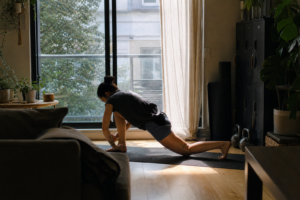
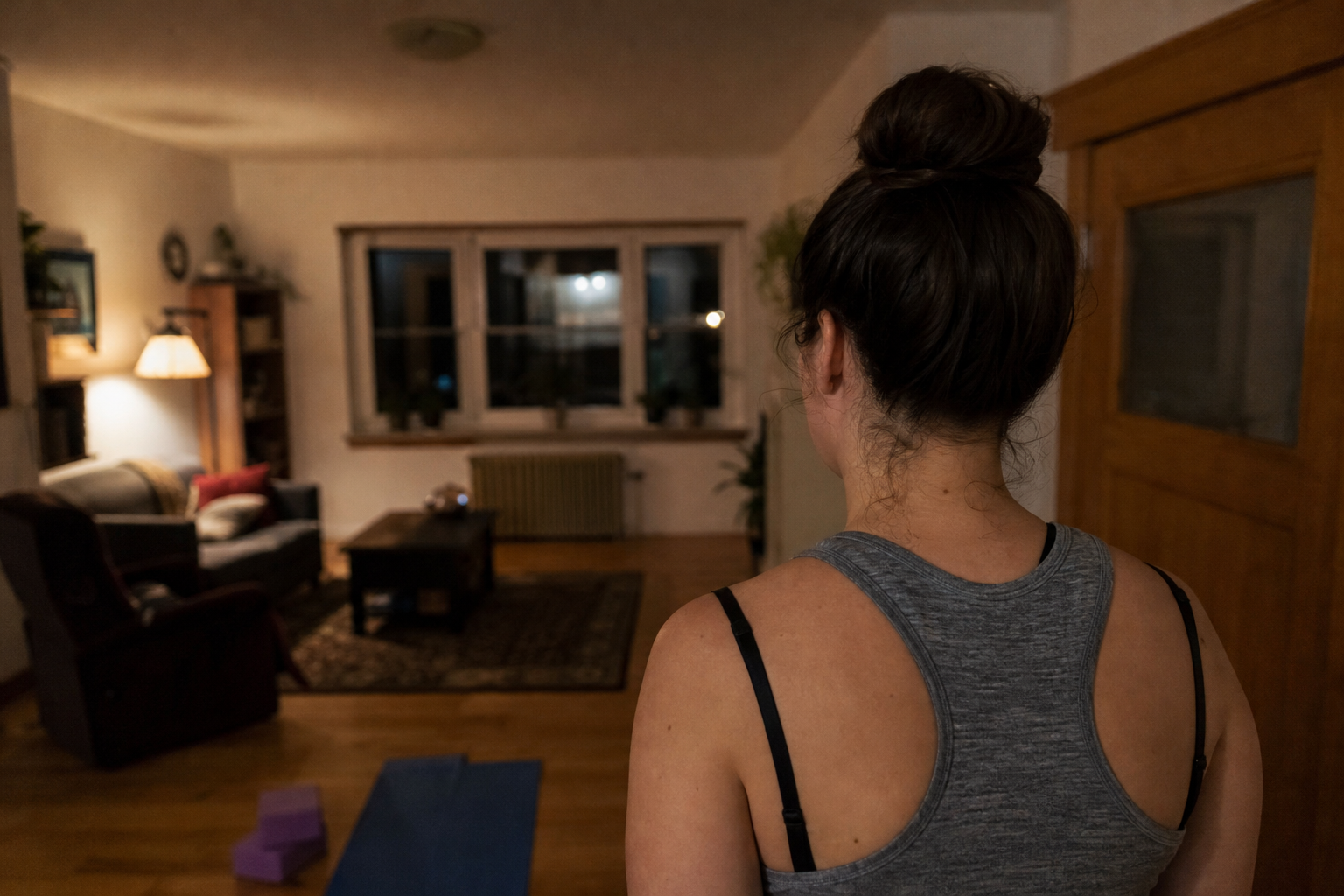
Exercise clothes can create a peculiar impression. Once I put them on, the world of exercise sometimes seems to belong to people who already know how to move. Their gestures appear settled. They seem to understand where to stand, what to do next, and how much effort a movement requires. My own uncertainty becomes more noticeable beside that apparent fluency.
I want to separate three things that can become tangled together: the appearance of being active, the skill involved in a particular movement, and the reason for moving at all. Clothing belongs mainly to the first. Practice develops the second. My reason lies elsewhere: I would like to remain capable of enjoying a modest mountain walk, ordinary meals, and the activities that make a day feel like my own.
Seen from that wider view, being a beginner is not an awkward exception to exercise. It is a legitimate stage in learning to live with a body. I can understand this in principle and still feel slightly out of place in the clothes.
That small discrepancy interests me. My thinking has allowed a beginner into the room, while my sense of belonging sometimes waits for evidence of competence. I would like the two to come a little closer together.
When clothing seems to make a promise
Clothes are practical objects, but they also carry associations. An apron suggests work at a bench or in a kitchen. Walking boots suggest a path beyond the pavement. Exercise clothes can suggest coordination, strength, and familiarity with physical effort before the person wearing them has done anything.
There is nothing unusual about this. We use appearances to make a quick outline of a situation. The difficulty begins when I treat that outline as a promise I am personally obliged to fulfill. Dressed for movement, I can feel as though I have announced an ability rather than an intention.
Yet the more modest interpretation is probably the more useful one. The clothes mean that I have made room for some movement. They do not certify the quality of it. A person can wear suitable clothes while learning, pausing, moving awkwardly, or discovering that the planned activity is too much for that day.
I think of the beginner’s sketchbook in a similar way. Owning one does not imply an accomplished hand. Its pages are a place where an uncertain hand can work. I would like to regard exercise clothes with some of that same generosity: not as a uniform earned through ability, but as an ordinary tool available during the process of acquiring it.
This does not immediately remove self-consciousness. It does, however, give me a less demanding explanation for what I am wearing.
The quiet work hidden inside an easy movement
A fluent movement conceals much of its history. When someone performs an exercise comfortably, I see the present action, not the earlier attempts that helped make it possible. The hesitations, adjustments, and periods of learning are largely absent from the scene.
Motor learning offers a straightforward explanation for some of this difference. An unfamiliar movement can require conscious attention to details that a practiced person handles with less deliberate thought. Balance, timing, and coordination have to be brought together. What looks like one simple action may contain several unfamiliar tasks.
I find this useful because I have a tendency to decide that something is beyond me before I have properly begun. A movement that looks easy in another person can become evidence, in my mind, that I am unusually unsuited to it. But the comparison leaves out the learning that separates us.
There is also more than one kind of beginner. Familiarity with walking does not automatically become familiarity with a strength exercise. Comfort with one piece of equipment may not carry over to another. The word describes a relationship with a particular activity more accurately than it describes a whole person.
That distinction gives me some breathing room. I do not have to settle whether I am an athletic person. I can simply acknowledge that this movement is unfamiliar, and that unfamiliarity has a place in practice.
A form of movement I can actually inhabit
I like walking partly because it leaves room for an ordinary version of myself. I can move without feeling that I am presenting a performance. The activity is still worthwhile when it is unremarkable. There is a route, a pace that feels manageable, and the experience of having moved through a little space.
With strength exercise, I am trying to allow a similar relationship. I prefer adapting a movement to what I can presently do rather than treating its most recognizable form as an entrance requirement. With pull-ups, for example, I am more comfortable working with the lowering portion than forcing myself to pull upward before I am ready.
The important part, for me, is not that this makes the exercise look more accomplished. It gives me a way to participate without pretending that my present ability is something else. An adapted form can still involve attention and effort.
I have also found that elaborate plans can place another kind of costume over exercise. The plan describes a disciplined, capable person in considerable detail, and then I feel obliged to become that person on schedule. A precise training plan has not been something I could sustain.
I am more interested now in leaving enough room to notice what is actually happening. Some days that means doing less than I imagined. Some days it means setting the plan aside. I would rather make adjustments than turn each mismatch into a judgment about whether I belong.
Belonging before fluency
The confidence I hope to gain from exercise is fairly quiet. It is less about appearing capable than about becoming a little more familiar with my own body. I sometimes feel refreshed after moving, and I often feel that I sleep better. These are personal impressions, not promises about what exercise will do.
There is also a modest satisfaction in having attempted something without requiring it to look polished. That satisfaction matters because my purpose extends beyond the exercise itself. I would like to keep enjoying walks, gentle climbs, and the ordinary freedom of being able to take part in things I care about.
From that perspective, the beginner’s stage does not need to be hurried out of sight. It contains real activity: noticing limits, learning a movement, finding a manageable form, and becoming familiar with effort. These things may look less impressive than fluency, but they are not outside the practice.
I still expect exercise clothes to make me self-conscious at times. A neat explanation does not instantly change a feeling. But I can try to give the clothes a simpler meaning. They are what I put on when I intend to move, including when I am unsure of the movement.
I do not need to make beginnerhood into an identity, either. It can remain a description of where I am with something today. For now, I would like to let that be an ordinary place to stand: dressed for exercise, not especially skillful, and still legitimately there.
This essay is a personal reflection, not medical advice. Decisions involving illness, medication, or exercise in relation to a medical condition belong in consultation with a physician.
This essay reflects my personal thoughts and experience. It is not medical advice. Please consult a qualified professional about your health.