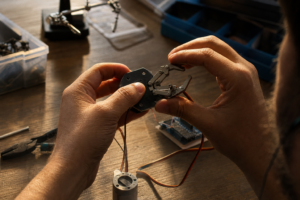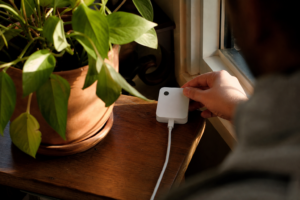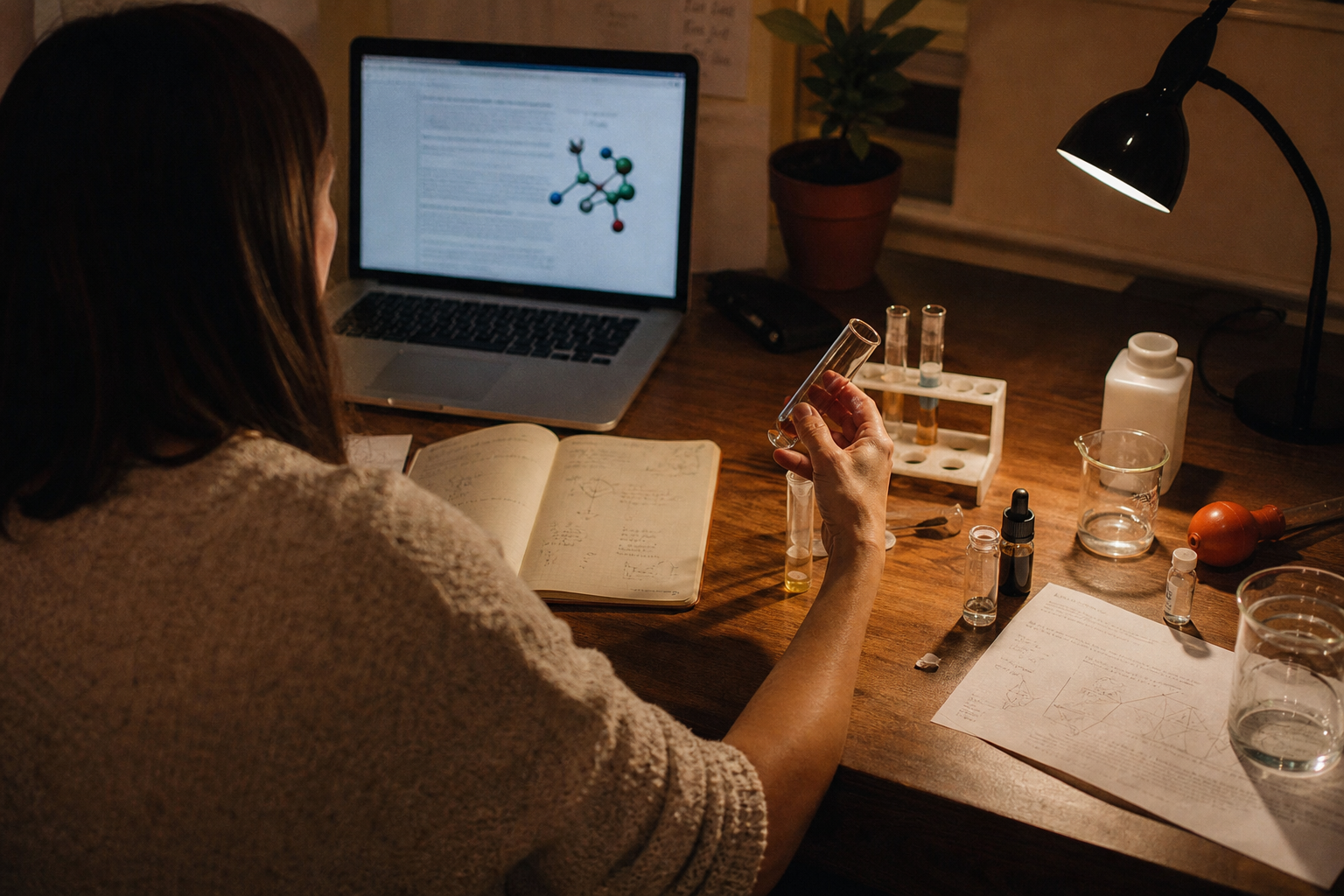
I tend to picture scientific progress as something that travels through several places before it reaches me. There is the place where a discovery is made, the place where it becomes a useful technology, and the much smaller place where I can finally do something with it. That last place might be a corner of my desk.
The news usually shows me the first two. A new instrument reveals something previously difficult to observe. A model performs a task that once required specialized work. I can understand that these developments matter without feeling that they belong to my own life. The distance begins to shrink when there is something I can adjust, examine, or try.
This is the part of progress that interests me most. Not only the advance itself, but its arrival in ordinary surroundings. I want to understand what changes when science stops being something I hear about and becomes something my hands can take part in.
Knowing About Something and Encountering It
Reading an explanation and conducting an experiment are different kinds of contact. A clear explanation can give me a map. It can describe the parts, their relationships, and the reason a result matters. Yet a map does not contain the resistance of the actual terrain.
Even a modest experiment introduces that resistance. A camera will not focus where I expect. A measurement changes when I move the instrument. A program accepts the input but returns something unhelpful. These are small inconveniences, but they reveal details that a polished account can leave out.
I do not think this makes practical experience superior to reading. Without some background, I may mistake an ordinary error for an interesting discovery. Without trying anything, I may carry an explanation that is much less complete than it feels. The two activities correct different weaknesses.
There is also a change in the shape of my ignorance. Before touching a tool, I may think that the whole subject is beyond me. After a first attempt, the uncertainty can become more specific: I do not understand this setting, this source of noise, or this step in the procedure. A specific difficulty is easier for me to approach than a vague sense of inability.
That matters because I have a habit of deciding that something looks too difficult before I have begun. Handling one small part does not remove the difficulty. It gives it edges.
The Long Journey Into an Ordinary Tool
A phone camera is a useful object to pause over. It is familiar enough to become almost invisible, yet it brings together optics, semiconductor devices, computation, and manufacturing. Much of that accumulated knowledge is concealed by the simplicity of tapping a screen.
I do not need to understand each layer before using the camera. Still, its familiarity can obscure how much scientific work has become available to me in such a small object. A tool can be ordinary in daily life and extraordinary in its construction.
The microscope offers a different view of this relationship. Its significance is not only that it makes small things appear larger. It also changes what can become an object of attention. Once an unfamiliar structure is visible, it becomes possible to describe it, compare it, and return to it.
A modest microscope at home is not equivalent to a research instrument. Its limitations matter. But the act of preparing a sample, adjusting the light, and finding a useful focus can make the relationship between instrument and observation more concrete. The image is not simply waiting there, independent of the conditions under which I look.
This is why I am drawn to gadgets and kits rather than only to announcements. They are places where a long chain of knowledge becomes available for a small personal act. I may only be examining a piece of fabric or the edge of a leaf, but I am participating in a way that reading a headline does not quite allow.
A Small Experiment Needs a Clear Boundary
My curiosity can spread faster than my available time. One interesting device suggests several accessories, which suggest another project, which seems to require a new skill. Before long, the imagined workshop becomes large enough that I postpone entering it.
I would rather begin with a bounded experiment. The purpose might be to observe how an image changes under different lighting, or to record how readings from a simple sensor vary across a room. The result need not be impressive. It needs to be clear enough that I can describe what I changed and what I observed.
Here, the distinction I am trying to make between thinking time and doing time becomes useful. Before beginning, I want to choose the object of attention, check the procedure, and decide what would count as finishing. During the attempt, I want to resist redesigning the entire project whenever another possibility occurs to me.
For a first experiment, I would favor low-risk materials and equipment used within its intended limits. Unfamiliar chemicals or exposed electrical work would add complications unrelated to the understanding I am trying to gain. A small scope is not merely convenient; it helps keep the purpose visible.
Afterward, a short note may be enough: the setup, the change I made, the result, and what remains uncertain. I do not want documentation to become a second elaborate hobby. I want enough of a record that the next attempt begins somewhere other than my memory of being interested.
AI Makes This Distance Both Shorter and Less Obvious
AI is especially interesting to me because the distance from announcement to personal trial can be so short. With access to a suitable tool, I can move from reading about a capability to testing a version of it at my desk. There is often little physical preparation.
That convenience creates its own difficulty. A fluent answer can feel like evidence of understanding, even when I have not checked its contents. With a physical instrument, a poor image or an unstable reading may make the problem visible. With generated language, uncertainty can arrive in an orderly paragraph.
I would therefore like to give an AI experiment a narrow task whose outcome I can inspect. It might help draft a small script that rearranges a copy of a sample table. I can compare the input and output, check whether values were preserved, and examine what happened when the data did not fit the expected format.
The useful experience is not simply receiving something plausible. It is finding out where the tool helps, what requires verification, and which parts I still cannot evaluate. Successful output and genuine understanding are related, but they are not the same thing.
Nor would one successful trial establish that the tool is reliable across other tasks. It would tell me something smaller and more useful: under these conditions, with these checks, I was able to make it do this particular thing. That seems a reasonable foundation for another experiment.
Keeping a Place for Unfinished Understanding
There is a temptation to treat bringing science home as a matter of ownership. A device arrives, a box is opened, and the future appears to have reached the room. But an unused instrument mostly represents a possibility. The more meaningful arrival may happen later, when I spend an ordinary hour learning what it can and cannot show.
I do not want every such hour to justify itself through productivity. Part of my interest is simply the wish to play with unfamiliar things. Looking closely, making an adjustment, and noticing an unexpected result can be worthwhile without becoming a project with a larger purpose.
At the same time, curiosity benefits from a little structure. A clear stopping point makes it easier to begin. A brief record makes it easier to return. Some background reading helps me distinguish an observation from the story I would like to tell about it.
I remain interested in scientific news. It supplies the wider map and reveals possibilities I would not have imagined on my own. But I suspect that my feeling for progress develops elsewhere, in smaller and less polished moments.
It develops when an abstract explanation encounters an awkward setting, an imperfect measurement, or a result I have to check. The desk does not become a research laboratory merely because I put an instrument on it. It becomes a place where I can exchange a little passive familiarity for a little tested understanding. For now, that is enough reason to keep a small space clear.